The short answer
Choose a deburring system by the quality and throughput it can demonstrate on your parts, not just its advertised cycle time. Before comparing machines, define the burr to remove, the features to preserve, and what counts as an acceptable finished part. Then compare the entire workflow, including loading, separation, cleaning and inspection.
IMTS 2026 runs September 14-19 in Chicago. Whether you are evaluating equipment at the show or talking with suppliers from your shop, these seven questions can help turn a product demonstration into a useful purchasing discussion. This article does not imply that Richwood is exhibiting at IMTS.
1. What exactly must change on the part?
“Remove the burr” is a starting point, not a complete acceptance criterion. Identify the burr location and condition, the desired edge, and the surfaces that need improvement. Also identify dimensions and features that must remain unchanged.
Bring the drawing and representative unfinished parts. If a cosmetic finish matters, agree on how it will be evaluated. If a measurable finish matters, identify the measurement method with the supplier and your quality team before testing.
2. Why does this process fit this geometry?
A useful supplier discussion should compare suitable methods, not begin and end with the machine on display. Ask why centrifugal barrel, vibratory or another finishing method is appropriate for your material, part size and features.
Ask about features that may trap media, surfaces that are difficult to reach, and whether part-to-part contact needs to be controlled. A process that works on an open, robust component may need a different approach for a delicate or intricate one. Manufacturer application guidance shows that mass finishing encompasses several equipment and process types; matching the method to the application matters.
3. Can we evaluate representative parts?
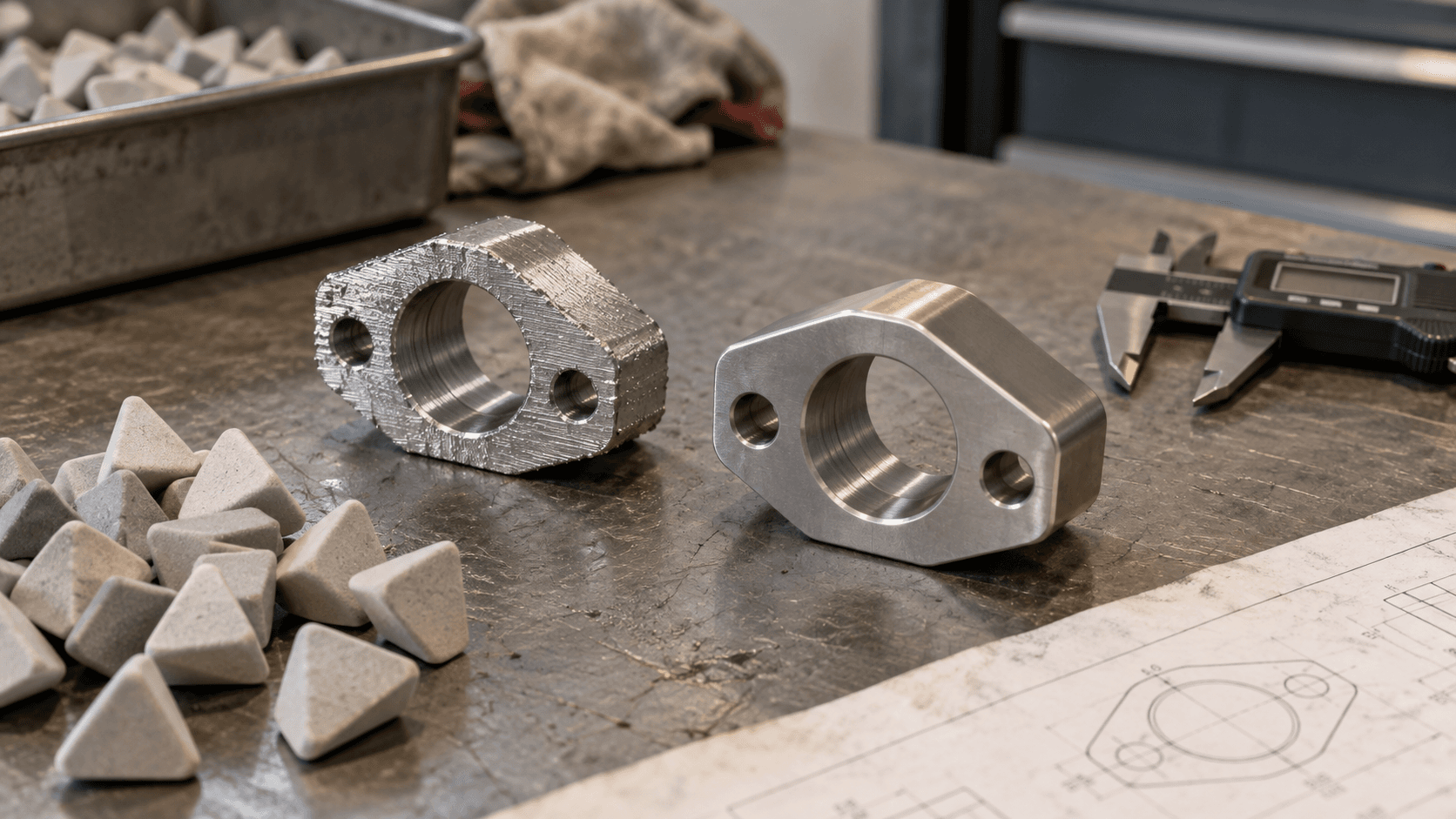
A polished demonstration sample is helpful, but it does not establish what will happen to your production parts. Ask how a trial will be arranged, what it includes, and whether the sample represents your actual material, burr condition and upstream process.
Before the trial, agree on what will be recorded. Keep both before and after evidence. Ask what further work would be necessary before scaling a successful sample result into production. Verify each supplier's trial terms rather than assuming testing is free.
4. What is the full batch time?
The finishing cycle is only one part of the workflow. Ask the supplier to walk through preparation, loading, processing, unloading, media separation, rinsing, drying and inspection where applicable.
Compare accepted parts per shift, not just the shortest quoted cycle. A faster process is valuable when the whole operation can use that speed without creating a new bottleneck.
5. What must we buy and prepare beyond the machine?
Ask for a clearly itemized scope of supply. Discuss the appropriate media and compound, handling and separation equipment, utility requirements, training, maintenance items and process-water arrangements.
For purchasing comparisons, use the same boundary for every quote. A machine-only price and a production-ready package are not directly comparable. Confirm site readiness against the actual equipment documentation before committing to an installation date.
6. How will we maintain a repeatable result?
Ask which process settings and consumables need to be recorded and controlled. Request the manufacturer's maintenance guidance and an explanation of how to recognize a change in finishing performance.
Your quality team should decide what inspection records are necessary for the application. Do not assume that a successful demonstration proves every future lot will meet the requirement without process controls.
7. Who helps when the result changes?
Clarify who provides process support, equipment service, parts and consumables after purchase. Ask what the support arrangement includes and how you initiate a request. Confirm any availability or response-time commitment in the current quotation.
Both manufacturers and distributors may provide useful support. Evaluate the actual arrangement rather than assuming one sales model always gives better service.
A comparison sheet to bring to the conversation
| Question | Evidence to request |
|---|---|
| Does it meet the part requirement? | Representative trial and agreed acceptance criteria |
| Will it fit our throughput? | Complete batch workflow and accepted output |
| What is included? | Itemized equipment, consumables, installation and training scope |
| Can we keep the result consistent? | Documented settings, inspection plan and maintenance guidance |
| What happens after delivery? | Named support route and current service terms |
Start with the part, then discuss the machine
Richwood Industries supplies centrifugal finishing equipment and related finishing products. To begin a useful discussion, prepare your material, part dimensions, batch volume, burr or finish concern, and production goal. Contact Richwood to discuss the application and the next step.