
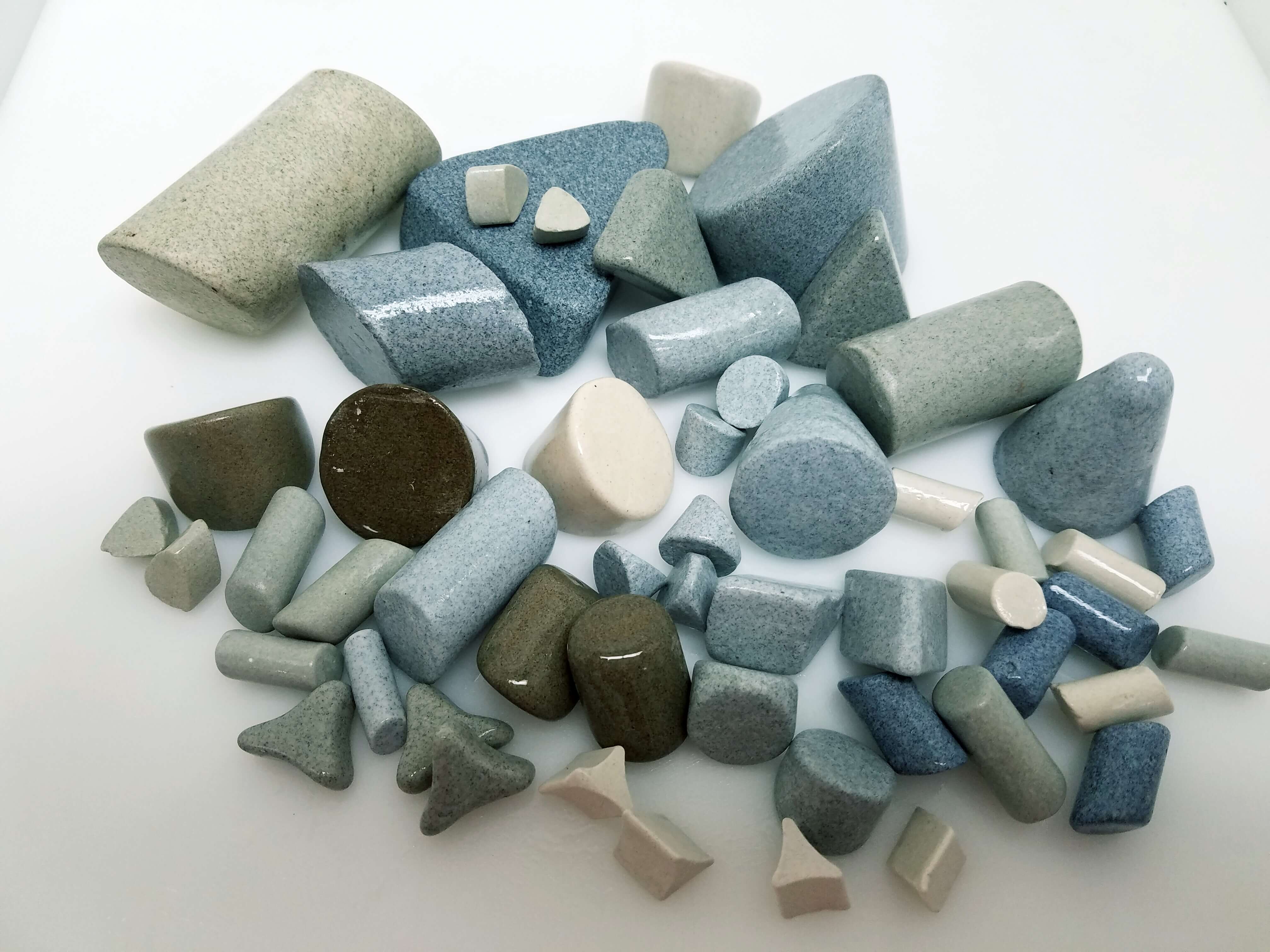
To reduce tumbling media lodging in parts, check the media's shape and actual dimensions against every hole, slot, and recess—not just the nominal size on the bag. Then verify that it reaches the surface you need to finish and separates from the part afterward. Repeat that check as the media wears. A piece that cuts well is not a good process choice if someone has to pick it out of every part.
Start with three questions: Where is it getting stuck? What shape and size are you running? What does the finished part need to look like?
What does media lodging mean?
Lodging is when a piece of finishing media becomes trapped in a part feature instead of separating freely. A hole or recess can admit the media in one orientation and catch it in another. That makes geometry a process question, not just a purchasing detail.
Kramer Industries' tumbling media selection guide identifies three linked checks: access to the surface, holes that could jam, and the ability to separate media from the part. It also specifically advises considering media wear when checking hole-jamming potential.
Do not solve the problem with “go smaller” alone
Smaller media may reach a feature that larger media cannot. It still has to come back out. Larger media may stay outside an opening, but then it may not reach the burr inside it. Neither direction is a universal answer.
Check the actual shape, too. A triangle, an angle-cut cylinder, and a cone with a similar listed size do not present the same profile to a hole. Keep the supplier's dimension convention with your process notes; one number does not describe the whole piece.
| What you see | What to check next |
|---|---|
| Media catches at a hole entrance | Compare the opening with the media's different orientations, not just one width. |
| Media enters a recess but does not leave freely | Check depth, internal clearance, and the available exit path. |
| Lodging appears after a previously acceptable run | Compare fresh and in-use media sizes and shapes; check for worn pieces. |
| Parts and loose media remain mixed after unloading | Check the separation method as well as feature lodging. These are different problems. |
| A larger size avoids the hole but leaves the burr | Recheck access to the target surface before accepting the change. |
These are troubleshooting checks, not a proven recipe for your part. Do not force a media sample into a feature and mistake that for a production trial.
Check the media in the machine—not only a new sample
The bag code identifies what you bought. The working load tells you what you are running today.
Compare representative new and in-use pieces. Record their dimensions in the same units as the part drawing. Look for pieces whose size or shape has changed enough to create a different fit. Kramer's guide recommends screening media to maintain sizing uniformity; the screening method and replacement point still need to suit the process.
There is no single replacement interval in this article. Establish it from the media, machine, part geometry, and observed wear rather than applying a calendar rule to every job.
Make separation part of the trial
A surface can look right while the process still needs work. In your trial notes, keep four outcomes separate:
- Did the process remove the target burr or produce the specified finish?
- Were critical features and dimensions still acceptable?
- Did any media remain lodged in the parts?
- Could the parts and loose media be separated by the intended production method?
Record the manual removal work as well as the machine cycle. Do not approve a change on appearance alone if it adds a picking operation you cannot support in production.
If no candidate can reach the feature, finish it acceptably, and come back out reliably, revisit the finishing method for that feature. A different bag of media is not always the answer.
What to send when you need help
Before requesting a substitute, gather the current bag code, media shape and dimensions, machine type, part material, and the hole or slot dimensions involved. Add a clear photo of where the media catches and state the finish or edge requirement. If you have an acceptable finished reference, identify what makes it acceptable.
For the broader material-family decision, see Richwood's tumbling media guide. This checklist addresses the narrower question: will that particular media fit the feature and separate afterward?
Next step: Browse Richwood's media and start a matching request. Include the old code and the problem feature so Kevin can check the details before recommending a replacement.