
A vibratory finishing bowl needs a reline assessment when its lining reaches the manufacturer's wear limit, exposes the metal beneath it, or shows damage that may compromise the process. A drain that no longer works also needs investigation. Do not select a replacement date from machine age alone, and do not assume every drainage problem means the lining has failed.
Start with three questions: Which machine is it? Where is the wear? What changed in the process? Those answers are more useful to a service provider than “the bowl looks old.”
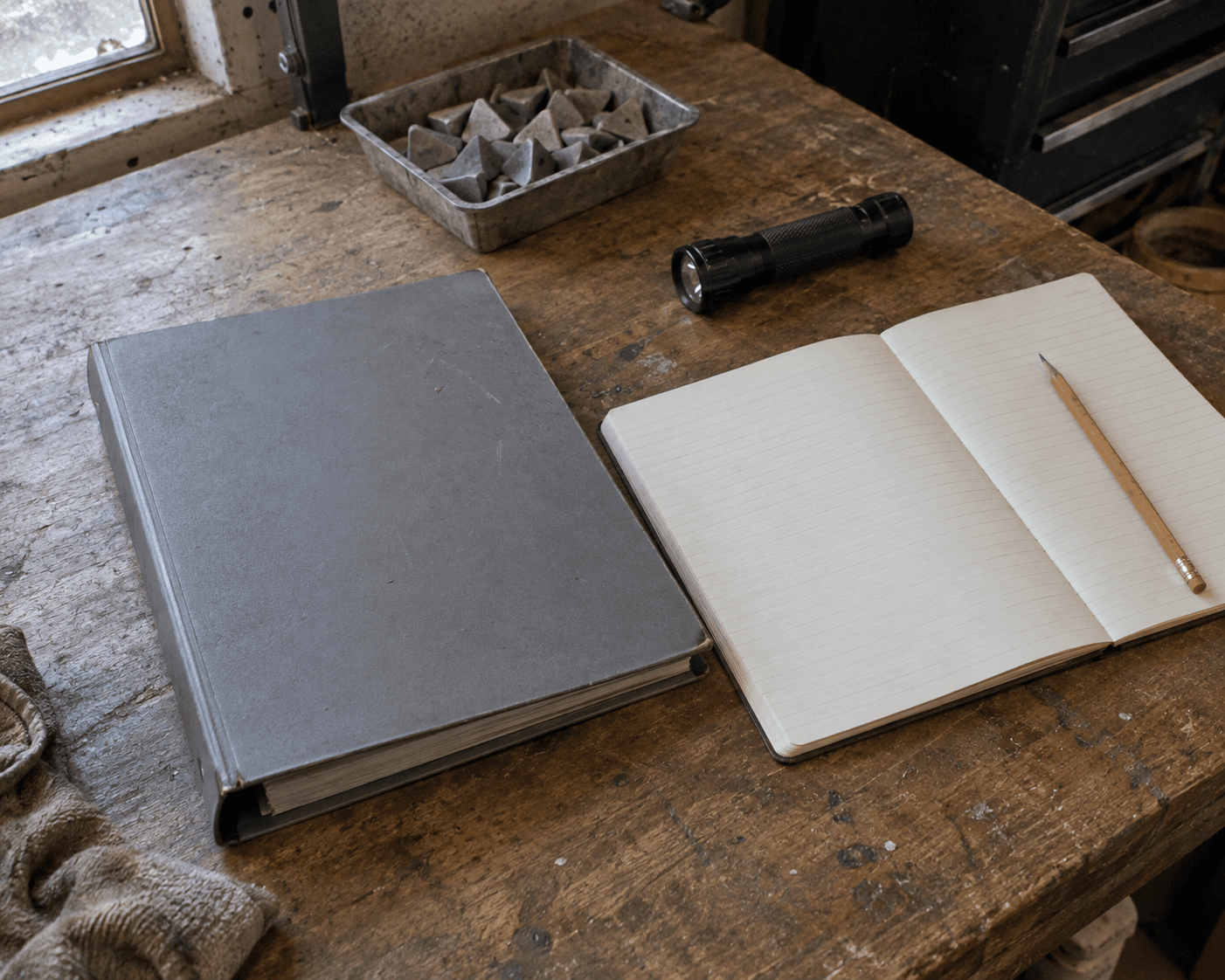
AI-generated conceptual illustration of maintenance-planning supplies on a workshop bench. Not a Richwood facility, product, inspection or measured test. Alt text: A notebook, pencil, maintenance binder and inspection flashlight on a worn workshop bench beside a tray of generic finishing media.
Why the lining wears
A vibratory finisher moves parts and media through a lined processing channel. Abrasive media removes material from the parts, but it also contacts the lining. That makes the lining a wear component—not a permanent surface.
The lining material and its properties must suit the application. A calendar interval from another shop, a different machine or a different finishing process is not a reliable replacement specification for yours. Follow the machine manufacturer's inspection method and service limits.
This article concerns vibratory bowls. Do not transfer its inspection details to centrifugal barrels, discs or other equipment without model-specific guidance.
What to record before calling for service
Inspect only with the equipment safely shut down and isolated according to its instructions and your site's procedure. Do not reach into operating equipment or remove guarding to take a picture.
| Observation | What to document | What it does—and does not—tell you |
|---|---|---|
| Visible bare metal in the processing channel | Overall bowl view and close-up showing the location | Treat it as a service issue, not a cosmetic mark to ignore. Ask the manufacturer about taking the machine out of service. |
| Local thinning, cuts or separation of lining | Location, extent and comparison with earlier inspection photographs | It needs assessment; appearance alone does not establish remaining service life. |
| Reduced or failed drainage | Whether the drain is obstructed and when the change began | Drainage needs diagnosis. A blockage and damaged lining are not the same repair. |
| A manufacturer-provided wear indicator becomes visible | Indicator location and condition | Use that manufacturer's interpretation. Not every machine has an indicator. |
| Finish or media movement changes | Part, media, load, compound and process changes alongside lining observations | A finish problem is not proof of a lining problem; examine the process as well. |
Keep photographs dated and taken from repeatable viewpoints. Include the make, model and serial number in the service request, plus operating hours if recorded. A useful history separates a new defect from a condition that has been stable over several inspections.
Do not improvise a thickness test by cutting, drilling or puncturing the lining. If a supplier specifies a measurement procedure, confirm that it applies to your exact equipment before using it.
A reline quote should cover the bowl beneath it
“New polyurethane” is not a complete scope of work. Ask the service provider what happens after the old lining is removed:
- Will the underlying bowl structure and mounting areas be inspected?
- How will needed structural repairs be assessed and quoted?
- Which lining material and profile suit this machine and application?
- Are drains, discharge components and other worn accessories included or excluded?
- What checks will be completed before the bowl returns to production?
Manufacturer refurbishment programs can include structural inspection and replacement of worn components as well as relining. That does not mean every quote includes those services. Get the actual scope in writing; do not assume a new lining corrects an underlying structural problem.
Ask separately about removal, freight, reinstallation and the expected outage. Any turnaround or warranty belongs to the specific provider's current written quote—not a general blog promise.
Confirm the process after the work
Plan the return-to-production check before the bowl leaves the shop. After the service provider clears the equipment for use, compare representative parts with your accepted finish and dimensional requirements. Record the media, load and process conditions so the comparison is meaningful.
Do not use a visually fresh lining as evidence that the finishing process is validated. Equipment condition and acceptable parts are related questions, but they require different checks.
The next step
If you are unsure whether a problem starts with the lining or the finishing process, contact Richwood Industries with the machine model, overall and close-up photographs, and a description of what changed. Start with the equipment and the part—not a guessed repair or a longer cycle.