
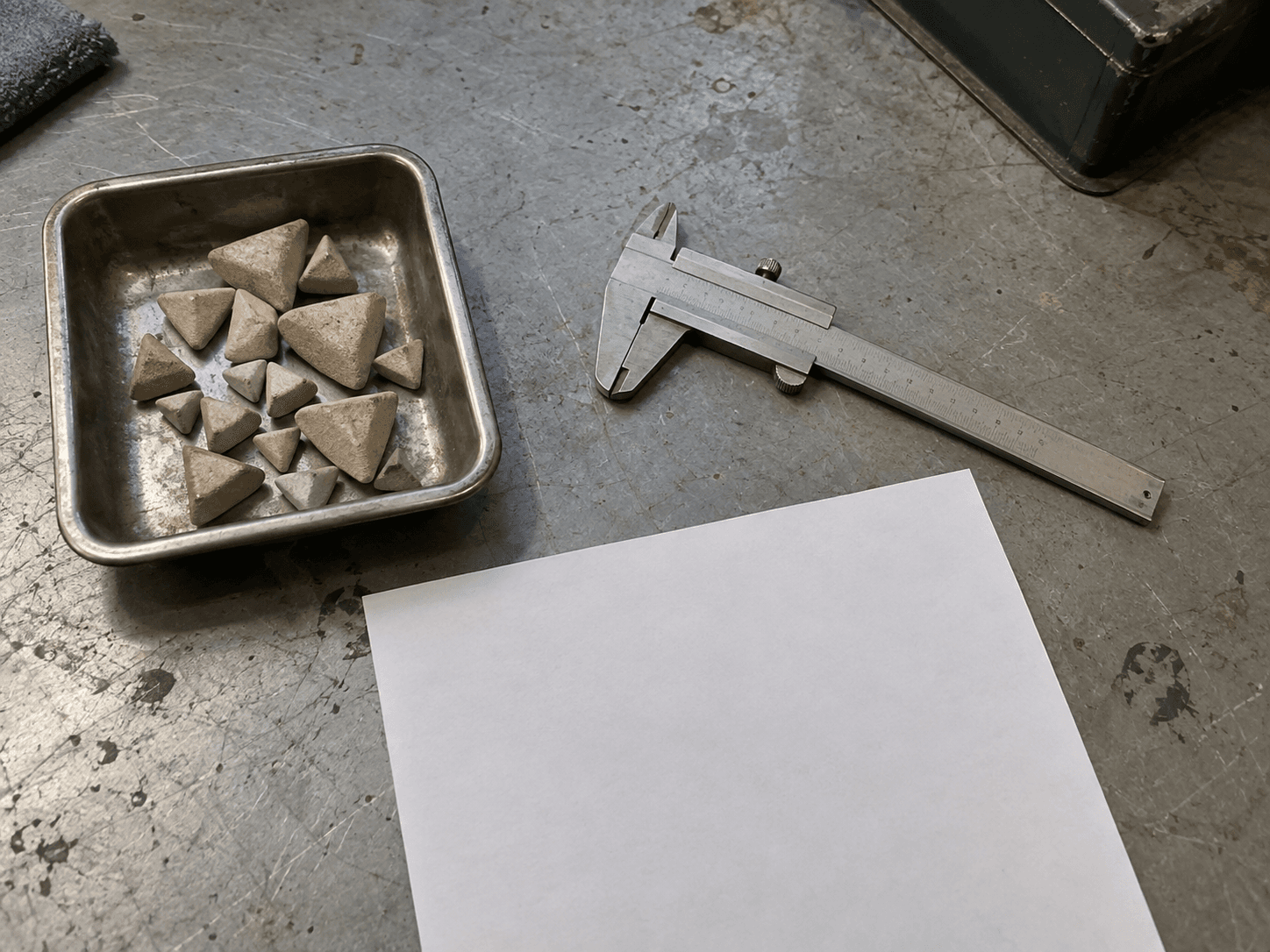
Replace media that has become too small for the validated process, and replenish the working charge before its level drifts outside the established operating range. Do not use age alone as the replacement rule. A slower cut can also come from glazed media or a water-and-compound problem, so diagnose the change before discarding the whole load.
Start with three questions: What media are you running? What size is it now? What changed on the finished part?
Separate wear from glazing
Wear changes the media's size and shape. Glazing is a coating of metal fines and other debris on its surface. They can occur together, but they are not the same problem.
Worn media can lodge in parts, obstruct drains and reduce finishing effectiveness. Glazing can leave contaminated media surfaces without their intended cutting action. In some cases, the supplier can recommend a cleaning process to restore glazed media.
That distinction matters: buying fresh media does not fix the water, drainage or compound condition that caused glazing in the first place.
| What you observe | What to check next |
|---|---|
| More small pieces in the working mix | Compare their dimensions with the approved media specification and the smallest part features. Review undersize removal. |
| A falling media level | Check wear, discharge losses and the replenishment record against the machine's established load requirements. |
| A shiny coating on cutting media, with dirty parts or reduced cutting action | Ask the supplier to assess glazing, compound suitability and water conditions. Appearance alone is not a diagnosis. |
| A changed result after a large addition of fresh media | Check the new media specification and whether the application requires conditioning before use. |
Set a removal limit for your parts, not somebody else's
There is no useful one-size-fits-all discard dimension. A piece that works in one batch may become a lodging risk in another part's hole or slot. The safe limit also depends on the separation method and the machine.
Agree the acceptable working-size range with your process supplier. Compare representative used media with the specified new media, and keep the measurement method consistent. If you use an undersize screen, confirm that it removes the unwanted fraction without removing the useful working mix. Check that the screen itself is not blocked.
For the geometry problem, see why tumbling media gets stuck in holes. For the unloading step, see separating finished parts from media. Here, the decision is how to maintain the media charge between batches.
Replenish deliberately; do not wait for a bad batch
Removing undersized media without replacing the loss changes the working load. Establish replenishment frequency through test batches and monitoring rather than a universal calendar interval.
Use the machine manufacturer's load instructions and your validated process as the reference. Do not transfer a vibratory machine's water-flow setting, fill level or replenishment schedule directly to a centrifugal barrel process.
A simple media log should capture:
- Media formulation, shape, nominal size and supplier identification.
- Working level or charge quantity, measured consistently.
- Undersized media removed and fresh media added.
- Part family, cycle setting and the acceptance checks used on the parts.
- Any change in finish, burr removal, lodging or separation.
This is a proposed control checklist, not a claim that Richwood has measured a particular wear rate.
Treat a full changeout as a process change
Fresh media is not automatically interchangeable with a seasoned working mix. New media's surface and edges can matter in fine-finishing and polishing applications.
Before releasing production after a full changeout, confirm the correct media and any required conditioning with the supplier. Run representative parts and check the actual acceptance requirements: burr removal, critical edges and dimensions, and the specified surface finish. A brighter-looking part is not a substitute for those checks.
Bring the current media and the target result
Contact Richwood with the machine model, part material, media specification and a description of what changed. Photos of the current media and an unfinished part alongside an acceptable finished reference help make the conversation concrete. Confirm sample arrangements before shipping anything.
You can also review Richwood's finishing media range. The goal is the right working mix for an accepted part, not simply another bag of abrasive.